
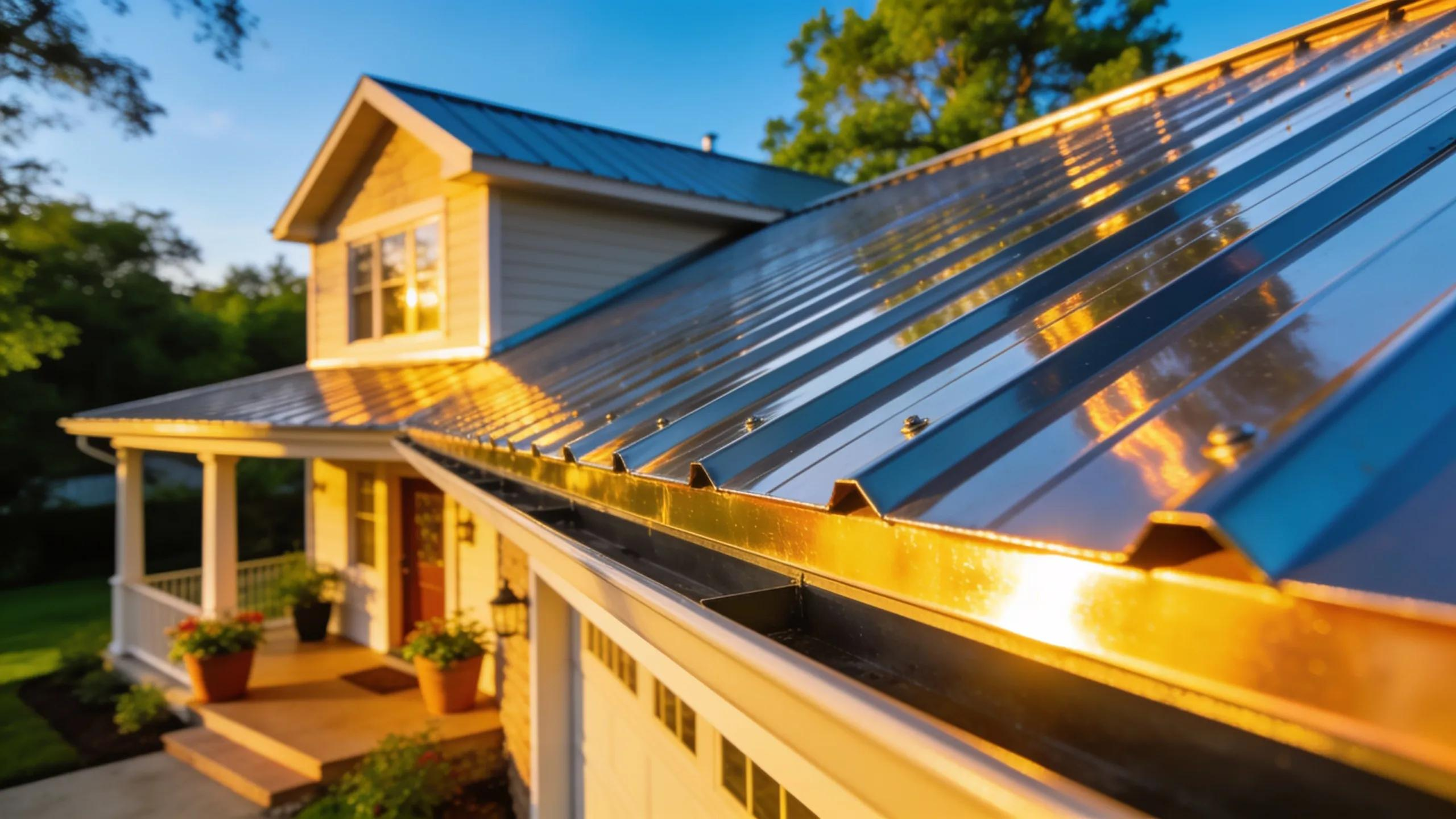

By Jay Carter, Jay Carter Roofing & Sheet Metal
Metal roofing has earned its reputation for lasting decades and performing reliably under demanding conditions, which is why so many homeowners and commercial property owners choose it over conventional materials. Manufacturing advances continue to push longevity, thermal performance, and finish quality further with each generation of product. This article looks at what drives that adoption — the core benefits, the maintenance a metal roof actually needs, and how it stacks up against asphalt shingles. For anyone weighing a long-term investment in their property, understanding these factors matters for both resale value and everyday comfort. Along the way, we cover the common metal substrates, realistic energy savings, sustainability considerations, warranty terms, and the cost-benefit case, drawing on Jay Carter Roofing’s own experience in the field.
Key Takeaways
- Metal roofing offers superior durability and longevity, lasting 40 to 70 years depending on materials and maintenance.
- Common metal roofing materials include galvanized steel, aluminum, and copper, each with distinct lifespan and benefits.
- Metal roofs significantly outlast asphalt shingles, providing up to three times longer service life and lower maintenance costs.
- Metal roofing enhances energy efficiency by reflecting solar heat, reducing cooling costs by 10-25% in summer.
- Many metal roofs are made from recycled materials and are fully recyclable, supporting sustainability goals.
- Regular inspections, debris cleaning, and prompt repairs are essential maintenance practices to maximize metal roof longevity.
- Warranties for metal roofs typically range from 25 to 50 years, covering rust, structural integrity, and paint finish.
- Although initial costs are higher, metal roofing offers strong return on investment through energy savings and increased property value.
- Professional installation with quality fastening and thermal expansion considerations ensures optimal metal roof performance and lifespan.
What Defines Metal Roofing Durability and Longevity?
Metal roofing stands up to the environmental wear, biological growth, and material fatigue that wear down conventional roofing systems far sooner. That resilience comes down to a few intrinsic properties: strong corrosion resistance, impact tolerance, and the fact that metal won’t burn. Quality products are manufactured under tightly controlled processes that reinforce structural integrity and weather performance from the start. Depending on the substrate and how well it’s installed, a metal roof typically lasts 40 to 70 years. Climate exposure, installation technique, and how consistently the roof is maintained all play a real role in how long it ultimately lasts.
Which Metal Roofing Materials Offer Optimal Lifespan?
A handful of metal substrates stand out for their longevity and performance.
- Galvanized Steel Roofing: Known for its high strength and resistance to corrosion, galvanized steel has an expected lifespan of around 40 years, making it an excellent choice for durability.
- Aluminum Roofing: Lightweight and resistant to rust, aluminum roofing often lasts up to 50 years, providing a long-term roofing solution ideal for coastal areas due to its weather resistance.
- Copper Roofing: Although more costly, copper roofing can last over 70 years, developing a beautiful patina over time that enhances its aesthetic value.
Each substrate brings its own strengths, so the right choice depends on the property, the climate, and the look a homeowner wants to achieve.
How Does Metal Roofing Compare to Asphalt Shingles in Longevity?

When it comes to metal roofing vs asphalt shingles, the lifespan gap is significant: asphalt shingles typically hold up for only 15 to 30 years, while metal roofing lasts substantially longer. Asphalt tends to deteriorate under wind, moisture, and temperature swings, while a metal roof keeps its structural integrity and protective performance even in severe conditions.
- Lifespan Difference: Metal roofs can last up to three times longer than asphalt shingles.
- Maintenance Cost: Metal roofs usually incur lower maintenance costs over their lifespans compared to asphalt shingles, leading to substantial savings.
- Weather Resistance: While asphalt shingles can become brittle and crack, metal roofing remains resilient, providing a reliable barrier against the elements.
The difference makes a strong case for metal roofing’s long-term value and lower lifetime maintenance costs.
How Does Metal Roofing Enhance Energy Efficiency and Environmental Impact?
Metal roof energy efficiency starts with how well the surface reflects heat. Metal surfaces bounce back solar radiant heat and can cut cooling loads by roughly 10-25% during the summer months, which means less strain on air conditioning and lower energy bills. Many metal products also contain recycled content and can be fully recycled at the end of their service life, supporting more sustainable construction overall.
- Reflective Property: The reflective surface of metal roofing creates a cooler indoor environment.
- Sustainability: Metal roofing can be fully recycled at the end of its life cycle, reducing landfill waste.
- Long-life Performance: The durability of metal roofs minimizes the need for replacement, further reducing environmental impact.
Together, these qualities translate into real savings for owners while supporting broader sustainability goals.
What Are the Measurable Energy Savings from Metal Roofs?
Metal roofing can meaningfully lower operational energy costs. Field studies and modelling point to energy savings of up to 25%, depending on climate, roof colour, insulation levels, and reflective coatings. For an estimate specific to your property, it’s worth consulting a professional metal roofing installation provider.
- Energy Savings: Properties with metal roofing often experience energy savings of up to 25%.
- Climate Adaptability: In hot climates, metal roofs help maintain a stable indoor temperature, positively impacting energy consumption.
- Reflectivity Coatings: Specialized coatings can further enhance the energy efficiency of metal roofs, providing additional savings.
Numbers like these are a big reason more property owners are switching to metal roofing.
How Does Metal Roofing Contribute to Sustainability Goals?
Metal roofing lines up naturally with today’s sustainability goals, thanks to its long service life and recyclability. A qualified metal roofing contractor can help identify the most sustainable material and finish for a given project.
- Recyclable Materials: Many metal roofs are made from recycled materials and can themselves be recycled when they reach the end of their life.
- Reduced Waste: A longer lifespan leads to fewer roof replacements, generating less construction waste over time.
- Energy Efficient Production: The manufacturing process for metal roofs is increasingly adopting sustainable practices, contributing to lesser environmental impacts.
Choosing metal roofing supports sustainability goals at the project level and beyond.
What Maintenance and Warranty Considerations Support Metal Roofing Longevity?
Metal roofs need less routine upkeep than conventional systems, but scheduled inspections and debris removal are still necessary to prevent localized corrosion and keep the roof weather-tight. Working with a reputable installer from the outset ensures the right components are chosen and installed to a high standard.
A solid manufacturer warranty also protects that investment on paper, not just in practice.
- Common Warranty Types: Many manufacturers provide warranties ranging from 25 to 50 years, covering issues like rust and structural failure.
- Maintenance Guidelines: Following manufacturer guidelines for cleaning and repairs enhances the roof’s longevity.
- Professional Inspections: Regular check-ups by experienced roofers can identify potential issues early, helping to prevent costly repairs.
Following the recommended maintenance schedule and understanding exactly what the warranty covers go a long way toward extending a roof’s service life and reducing risk down the road.
What Are the Recommended Maintenance Practices for Long-lasting Metal Roofs?
Routine maintenance makes a real difference in how long a metal roof lasts. Here are the practices we recommend.
- Regular Inspections: Schedule annual inspections to identify potential issues early, such as rust or loose panels.
- Cleaning Debris: Clear leaves, branches, and other debris from the roof surface and gutters to prevent water pooling and rusting.
- Repairing Damage Promptly: Address any damages, such as scratches or dents, immediately to prevent further deterioration.
Staying consistent with these steps keeps a metal roof performing well for the long haul.
How Do Warranties Protect Your Investment in Metal Roofing?
A warranty is a safeguard for anyone investing in a metal roof. Understanding exactly what the terms cover matters for managing risk, and Jay Carter Roofing can help clarify the fine print and handle registration.
- Coverage Variety: Warranties often cover different aspects, including paint finish, structural integrity, and leak-proof features.
- Importance of Registration: Homeowners are typically advised to register their warranty promptly to activate coverage.
- Transfer Options: Many warranties are transferable, which can enhance the property value if the home is sold.
Solid warranty coverage protects the investment financially and cuts down the risk of unplanned replacement costs.
What Are the Cost Benefits and ROI of Choosing Metal Roofing?
Metal roofing typically costs more upfront than asphalt shingles, but looking at the full lifecycle, the long-term savings usually outweigh that initial premium. It’s worth talking with industry specialists to work out the right materials and installation approach for a specific project.
Metal roofing offers several financial advantages:
- Longevity: With lifespans exceeding 40 years, metal roofs reduce the frequency and cost of replacement.
- Energy Savings: Reduced energy costs contribute to overall savings, often offsetting the higher initial investment over time.
- Appraisal Value: Homes fitted with quality metal roofing often see increased property values.
Taken together, these factors typically add up to a favourable return on investment for owners who choose metal roofing.
How Does Metal Roofing Cost Compare to Traditional Asphalt Shingles?
A closer look at the numbers reveals some clear distinctions between metal roofing and asphalt shingles.
- Initial Investment: Metal roofing typically costs between $120-$900 per square foot, whereas asphalt shingles range between $90-$100 per square foot.
- Long-term Value: While the upfront costs for metal roofing are higher, their durability leads to reduced replacement and repair costs.
- Insurance Benefits: Many insurers offer better protection rates for homes with metal roofing due to their fire and damage resistance, further saving money over time.
These cost differences make a strong economic case for factoring metal roofing into long-term property planning.
What Is the Long-term Return on Investment for Metal Roof Installation?
Return on investment for a metal roof installation is generally strong. Working with an experienced installer, such as Jay Carter Roofing, helps get the most out of the roof’s lifecycle performance and financial return.
- Estimated ROI: Homeowners typically recoup 85-95% of their metal roofing costs upon selling their homes.
- Value Retention: Metal roofs tend to retain their value better than traditional roofing materials, further maximizing financial return.
- Market Demand: With increasing consumer preference for quality and durability, properties equipped with metal roofing enjoy enhanced market desirability.
All of this reinforces metal roofing as a financially sound choice — a durable asset that holds its value.
Why Choose Jay Carter Roofing for Professional Metal Roofing Installation?
Who installs a metal roof matters just as much as the materials used — it’s one of the biggest factors in how well the roof performs and how long it lasts. Jay Carter Roofing provides specialized metal roofing services for clients who want the job done right.
Jay Carter Roofing brings focused expertise in metal roofing, using industry-standard materials and installation methods. The company places a strong emphasis on material quality and advanced installation practices to deliver consistent, code-compliant results.
- Experience: With a proven track record in the GTA, Newmarket, and Barrie, the company’s contractors understand the unique requirements for metal roof installations.
- Customer Satisfaction: Jay Carter Roofing emphasizes customer service and satisfaction, ensuring all projects align with homeowner expectations.
- Expert Guidance: The company provides invaluable advice on selecting the best roofing material and design to suit individual property needs.
Anyone considering metal roofing can count on Jay Carter Roofing for professional installation and genuine local expertise.
What Specialized Installation Processes Ensure Metal Roof Longevity?
Getting the installation right is essential to getting the performance a metal roofing system is designed to deliver. Specialist processes ensure every component is assembled and secured accurately, which is what keeps the roof durable.
- Quality Fastening: Utilizing high-quality fasteners and rigorous securing methods prevents leaks and extends roof lifespan.
- Thermal Expansion Consideration: Proper spacing of panels accommodates thermal expansion and contraction, ensuring the roof remains intact under temperature fluctuations.
- Professional Techniques: Experienced contractors apply techniques designed specifically for metal roofing, enhancing stability and performance.
These installation practices are central to getting the longest possible life out of a metal roofing system.
Recent material developments, including nano-enhanced phase change materials, are improving thermal regulation within roof assemblies and reducing cooling demand.
Nano-Enhanced Materials for Energy-Efficient Roofing The review provides a comprehensive analysis of nano-enhanced phase change materials (NEPCMs) and their application in energy-efficient buildings. It evaluates how nanoparticle integration into conventional PCMs increases thermophysical performance and thermal conductivity, accelerates phase transitions, and improves thermal cycling stability. The study highlights NEPCMs’ suitability for passive cooling in warm, dry climates where low-energy sustainable cooling systems are required. Results indicate that carbon-based nanoparticles, particularly graphite and graphene nanoplatelets, yield larger thermal conductivity improvements compared with metal and metal oxide nanoparticles. The integration of NEPCMs into building envelopes—walls, roofs, glazing/shading, and underfloor heating modules—can moderate interior temperatures, reduce peak cooling loads, and lower total energy consumption. Recent advances in nano-enhanced phase change materials for energy-efficient buildings: a comprehensive review, 2026
Which Service Areas Does Jay Carter Roofing Cover for Metal Roofing Solutions?
Jay Carter Roofing provides metal roofing services across the Greater Toronto Area and the surrounding regions, making professional installation accessible to homeowners throughout the area.
- Cities Covered: Including Newmarket, Barrie, and beyond, ensuring accessibility for a wide range of homeowners in need of roofing solutions.
- Service Range: The company provides a full suite of services, including installation, maintenance, repair, and consultation on metal roofing options.
Choosing Jay Carter Roofing means working with a team that knows the local area and delivers professional roofing services close to home.
Frequently Asked Questions
1. What are the benefits of choosing metal roofing over traditional materials?
Metal roofing offers a much longer service life (typically 40 to 70 years), fewer replacements, and better thermal performance thanks to its reflective surface. Many systems also contain recycled content and are recyclable, which lowers their environmental footprint. The upfront cost is higher, but lower maintenance needs and energy savings often make up for that difference over time.
2. How do metal roofs perform in extreme weather conditions?
Metal roofing is built to withstand severe weather. It resists hail impact, high winds, and heavy rain without losing structural integrity, and because it’s non-combustible, it also holds up better against fire. Its smooth, low-friction surface helps snow shed naturally, which keeps accumulated loads down. Altogether, that makes it a dependable choice across a wide range of climates.
3. Can a metal roof be installed over an existing roof?
In many cases, yes — metal roofing can be installed over an existing roof, which can save on demolition costs and shorten the project timeline. That said, the structure’s capacity, local building codes, and the condition of the existing substrate all need to be checked first. A qualified roofing contractor can confirm whether it’s the right approach for a given property.
4. What are the aesthetic options available for metal roofing?
Metal roofing comes in a wide range of profiles, finishes, and colours to suit almost any design. Options include standing seam, corrugated panels, and tiles styled to resemble slate or traditional shingles. Manufacturer-applied paint systems and pre-finished coatings add both visual variety and corrosion protection, so the roof can match the architecture rather than compromise it.
5. What common misconceptions exist about metal roofing?
A few misconceptions still linger despite what the performance data actually shows. Concerns about noise during rainfall are largely resolved by proper insulation and attic construction; metal roofs are no more likely to attract lightning than any other roofing material; and maintenance needs are generally lower than for most conventional systems. Clearing up these myths helps homeowners make a more informed decision.
6. How does the installation process affect the longevity of a metal roof?
Installation quality has a direct impact on how long a metal roof lasts. Correct fastening, proper allowance for thermal movement, and following manufacturer specifications all help prevent early problems like leaks and accelerated corrosion. Working with contractors experienced in metal roofing systems is essential to getting the full service life the product is designed for.
7. Are there financing options available for installing metal roofing?
Yes — financing is commonly available through contractors and financial institutions, including loans and structured repayment plans that spread out the upfront cost. Homeowners may also qualify for energy-efficiency rebates or tax incentives tied to specific roof products or installations. It’s worth checking with both the contractor and local authorities to see what programs apply.
FAQ
How long does a metal roof last?
Metal roofs last 40 to 70 years depending on the substrate, installation quality, climate exposure, and maintenance consistency. Copper leads with over 70 years, while galvanized steel lasts around 40 years.
Why does metal roofing outperform other materials in durability?
Metal resists corrosion, tolerates impact, and won’t burn, properties reinforced through tightly controlled manufacturing processes. These intrinsic qualities let metal roofs withstand environmental wear and material fatigue far longer than conventional roofing.
Which metal roofing material lasts the longest?
Copper roofing lasts over 70 years and develops an attractive patina over time. Aluminum follows at up to 50 years, while galvanized steel offers around 40 years of durable performance.
Conclusion
In closing, metal roofing delivers longevity through material integrity, engineered installation, and resistance to the elements that degrade conventional roofing systems over time. This durability translates directly into long-term value, reduced maintenance demands, and dependable protection for residential and commercial properties alike. Jay Carter Roofing & Sheet Metal applies two generations of fabrication and installation expertise to every project, ensuring each roofing system is built to perform reliably for decades. Property owners who prioritize longevity make an informed, evidence-based investment when they choose metal roofing.


