
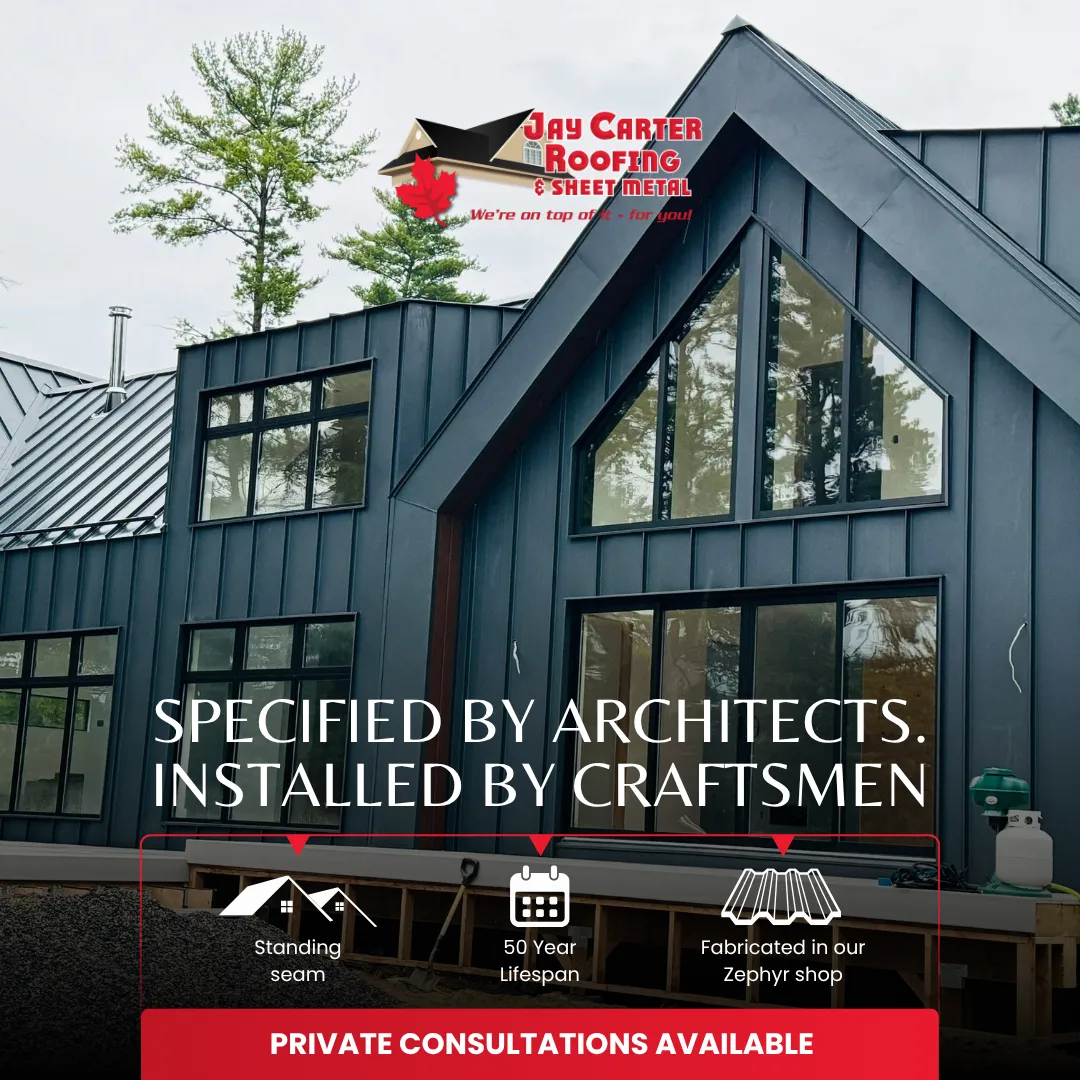

The Top 5 Benefits of Metal Roofing for Ontario Properties
By Jay Carter, Jay Carter Roofing & Sheet Metal
Selecting an appropriate roofing material is a critical decision for residential and commercial property owners in Ontario due to the region’s variable climate. Metal roofing is distinguished by extended service life, enhanced thermal performance, and favourable lifecycle costs. This article identifies the five principal benefits of metal roofing in Ontario and explains its applicability to diverse building types. Property owners commonly face elevated maintenance and replacement expenses, uncertain energy outlays, and limited material longevity; metal roofing mitigates these issues through its material properties and installation practices.
Key Takeaways
- Metal roofing in Ontario offers exceptional durability, lasting 40 to 70 years with resistance to harsh weather conditions.
- Its superior weather resistance includes efficient snow shedding and moisture prevention, reducing structural damage risks.
- Metal roofs enhance energy efficiency by reflecting solar heat, lowering cooling costs by up to 25% in summer.
- Energy cost savings from metal roofing can exceed 20%, reducing heating and cooling expenses significantly.
- Various metal roofing styles and materials, like steel and aluminum, provide durability and aesthetic versatility for Ontario properties.
- Although metal roofing has higher initial costs than asphalt shingles, its longevity and low maintenance yield long-term savings.
- Maintenance for metal roofs is minimal, requiring only periodic inspections and cleaning compared to frequent asphalt repairs.
- Professional installation and regular upkeep are essential to maximize metal roofing performance and lifespan in Ontario.
- Local providers like Jay Carter Roofing offer specialized metal roofing solutions tailored to Ontario’s climate and building codes.
What Makes Metal Roofing Durable and Long-Lasting in Ontario Climates?
Metal roofing exhibits high durability attributable to the intrinsic properties of common substrate materials such as galvanized steel and aluminum, and to engineered profile designs that resist mechanical and environmental degradation. These systems tolerate Ontario’s severe winter conditions, significant snow loads, and wide temperature fluctuations while maintaining structural integrity. Service life commonly exceeds 40 years when materials and installation meet industry standards.
Applied protective finishes and proprietary coatings further enhance corrosion resistance and reduce the risk of rust in humid environments. Unlike some conventional coverings, metal panels do not readily warp or fissure under thermal cycling, which reduces failure modes associated with moisture ingress and physical deterioration. Consequently, metal roofing delivers consistent, measurable performance over extended periods.
Jay Carter Roofing and Sheet Metal provides metal roofing products and installation services adapted to both residential and commercial specifications across Ontario. Their documented installation practices and maintenance recommendations are intended to optimise service life for installed systems.
How Does Metal Roofing Provide Superior Weather Resistance?

Metal roofing delivers enhanced weather resistance through panel geometries and seam configurations that promote rapid snow shedding and reduce static snow accumulation. This characteristic limits prolonged loads on roof structures and diminishes the likelihood of moisture penetration that can lead to structural compromise. The performance characteristics of metal systems also reduce the incidence of water-related failures that are common with other materials under heavy precipitation.
The smooth, non-porous surface of metal panels minimises moisture retention and associated microbial growth, thereby reducing the risk of mould and mildew development. This mitigative effect supports the preservation of building envelope integrity and contributes to maintaining indoor environmental conditions within design parameters.
What Are the Typical Lifespan and Warranty Details for Metal Roofs?
Metal roofing systems typically provide operational lifespans of 40 to 70 years, which substantially exceeds the typical 15 to 25-year service window for conventional asphalt shingles. Manufacturer and installer warranties commonly range from 30 to 50 years and address issues such as finish deterioration, material defects, and loss of protective properties, depending on the product specification.
Low routine maintenance requirements—principally periodic inspections and limited corrective actions—support the extended service life of metal roofs. Installation quality, substrate selection, and adherence to manufacturer guidelines materially influence longevity. Professional installation, as supplied by firms such as Jay Carter Roofing and Sheet Metal, ensures compliance with relevant building codes and industry standards to maximise service life.
5 Key Benefits of Metal Roofing for Ontario Properties
Metal roofing contributes to improved building energy performance via high solar reflectance and compatibility with insulating assemblies. Appropriately specified and installed systems reflect a portion of incident solar radiation, which can reduce summertime cooling loads by up to 25% in certain configurations. These reflective properties support more consistent indoor temperatures and reduced peak cooling demand.
In addition, metal roofing assemblies are compatible with insulation strategies that limit conductive heat transfer, thereby supporting reduced heating demand during colder months. The aggregate effect of reflective finishes and thermal assembly design can produce meaningful reductions in utility consumption when compared to less thermally efficient roofing materials.
What Energy Cost Savings Are Associated with Metal Roofing?
Adoption of metal roofing can generate measurable energy cost reductions, with potential savings on combined heating and cooling expenditures exceeding 20% under specific building and climate conditions. Reflectivity and thermal assembly performance reduce reliance on mechanical conditioning systems, lowering operational energy use.
Empirical studies and field data indicate that buildings with metal roofs often operate with reduced HVAC runtimes, translating to lower electric and fuel consumption. Given Ontario’s seasonal variability, these operational savings can accumulate over the roof’s service life and contribute to the overall financial justification for metal roofing investments.
Which Metal Roofing Styles and Materials Are Best Suited for Ontario Properties?
Several metal roofing profiles are suitable for Ontario applications, including standing seam systems and architectural metal shingle profiles, each offering distinct performance attributes and aesthetic outcomes. Selection should be based on structural requirements, desired service life, and architectural compatibility.
Material options commonly include steel, aluminum, and copper. Steel is frequently selected for its structural strength and cost efficiency; aluminum is preferred where enhanced corrosion resistance is required; and copper is chosen for its longevity and distinct patination, albeit at a higher initial material cost. These options provide scope for performance optimisation across different site conditions.
How Can Customers Customize Metal Roofing Designs to Fit Aesthetic Requirements?
Metal roofing systems provide multiple customization parameters, including colour specification, panel profile, and finish selection, which enable visual integration with existing architecture. Design choices can be aligned with performance requirements without compromising material durability.
Manufacturers offer coordinated colour palettes and finish systems that replicate traditional textures, such as tile and slate, while retaining the performance advantages of metal. Clients may engage qualified installers, such as Jay Carter Roofing and Sheet Metal, for guidance on selecting configurations that balance appearance with technical performance.
How Does Metal Roofing Compare Cost-Wise to Asphalt Shingles in Ontario?
On a first-cost basis, metal roofing typically requires a higher capital outlay than asphalt shingles. However, the extended service life and reduced maintenance intensity of metal systems produce a lower total cost of ownership in many scenarios. Metal roofs often achieve two to three times the service life of asphalt, which alters lifecycle cost comparisons.
The superior durability of metal roofing reduces the frequency of replacements and unscheduled repairs, thereby attenuating long-term expenditure volatility. While asphalt may require full replacement within 15 to 25 years, metal systems commonly extend beyond 40 years, which materially impacts lifecycle budgeting.
What Is the Initial vs. Long-Term Cost Analysis of Metal Roofing?

Initial installed costs for metal roofing are commonly quoted in the range of $150 to $300 per square, depending on material specification and labour inputs. This upfront investment should be evaluated alongside anticipated service life and projected operational savings to determine lifecycle value.
Over a planning horizon of approximately 50 years, reductions in energy consumption and maintenance interventions can offset higher initial expenditures, producing net financial benefits in many use cases. This long-term cost analysis informs the rationale for selecting metal roofing in Ontario.
How Do Maintenance and Repair Costs Differ Between Metal and Asphalt Roofs?
Maintenance profiles for metal roofs are typically less intensive than those for asphalt shingles. Asphalt roofs are more susceptible to weather-induced degradation and may require frequent corrective repairs, whereas metal roofs generally necessitate scheduled inspections and limited maintenance activities.
Routine metal roof maintenance generally entails debris removal, verification of fastener integrity, and periodic cleaning—tasks that are less labour-intensive than repeated shingle replacement and patching. The predictable maintenance regime of metal roofing facilitates more accurate long-term budgeting for property owners.
What Are the Best Practices for Installation and Maintenance of Metal Roofing in Ontario?
Adherence to best practices in installation and maintenance is essential to realise the expected performance of metal roofing systems. Employing certified installers with experience in local building code requirements, performing biannual inspections, and addressing identified issues promptly are core practices for preserving system integrity.
Additional measures such as regular debris clearance, ensuring secure fasteners, and maintaining appropriate flashings and sealants extend service life and preserve the building envelope. Consistent application of these practices supports asset value retention.
Where Can Ontario Customers Source Quality Metal Roofing and Installation Services?
Ontario property owners seeking metal roofing products and installation services should consider local providers with demonstrated technical expertise, such as Jay Carter Roofing and Sheet Metal, which offer tailored solutions and certified installation practices aligned with regional requirements. Supplier selection should prioritise documented experience with metal systems and compliance with applicable standards.
Evaluation criteria for selecting a contractor include verified customer references, documented project history, and comprehensive warranty provisions. Reviewing proposals and warranty terms enables property owners to assess risk allocation and long-term service commitments.
The table presents comparative lifespans and warranty durations, reinforcing the long-term performance and reduced renewal frequency associated with metal roofing systems. This contrast underscores the rationale for choosing metal roofing where lifecycle considerations are prioritised.
Frequently Asked Questions
1. Are there specific energy efficiency certifications for metal roofing in Ontario?
Metal roofing products may qualify for recognised energy efficiency certifications such as ENERGY STAR when they meet defined reflectivity and emissivity criteria. Specification of certified products can support verified reductions in cooling demand and contribute to measurable energy performance improvements.
2. How does the installation process for metal roofing differ from asphalt shingles?
Metal roofing installation typically involves larger panels, continuous seams, and precision fastening systems, requiring specialised installation techniques to achieve appropriate sealing and thermal movement accommodation. Asphalt shingles are installed in modular pieces and present different detailing requirements. Engagement of installers with metal-specific experience is necessary to ensure expected system performance.
3. What are the common misconceptions about metal roofing?
Common misconceptions include assertions that metal roofing is excessively noisy or inherently prone to corrosion. Proper underlayment and insulation mitigate airborne noise transmission, while contemporary protective coatings and material selections substantially reduce corrosion risk. These misconceptions often persist despite documented performance data.
4. What type of underlayment is recommended for metal roofing?
Selection of a high-quality underlayment is critical to waterproofing and thermal performance. Synthetic underlayments are frequently recommended for their enhanced durability and moisture resistance; traditional felt may be acceptable in some applications. Underlayment choice should align with manufacturer guidance and local code requirements for optimal compatibility.
5. Can metal roofing be installed over existing roofs?
In many cases, metal roofing can be installed over existing coverings, particularly asphalt shingle substrates, which can reduce removal costs and waste. Prior to installation, structural assessment is required to confirm roof framing capacity and to ensure adequate ventilation to prevent moisture accumulation.
6. How does climate affect the choice of metal roofing material?
Climatic factors inform material selection. For example, aluminum offers superior resistance to corrosion in saline or humid environments, whereas galvanized steel provides structural robustness suited to cold climates. Ontario property owners should consider local humidity, temperature ranges, and exposure conditions when specifying materials.
7. Are there special considerations for snow load in metal roofing in Ontario?
Snow load considerations are integral to system design for Ontario applications. Roof structures and panel systems must be specified and installed to accommodate anticipated snow accumulation. Professional evaluation of regional snow load parameters and appropriate system rating is essential to maintain structural safety and performance during winter conditions.
Conclusion
Metal roofing in Ontario offers extended service life, verified energy-performance benefits, and a demonstrable reduction in long-term maintenance and replacement costs. These attributes support a lifecycle-based rationale for selection in both residential and commercial projects. Property owners should consult qualified local professionals to evaluate system options and to ensure installations that meet regulatory and technical requirements for the Ontario climate.


